

Modern life has distanced us from our original connection to nature. Yet its benefits for our physical and mental health are scientifically proven.
The emergence of ecotherapy
In the 1980s, therapeutic practices developed in the United States with the aim of restoring the connection between humans and the rest of the living world. Grouped under the name “ecotherapy”, these practices aim to get people moving and reconnecting with their natural environment, thereby contributing positively to their overall health. As psychologist Thomas Busigny explains, it is not simply a matter of being in contact with nature or spending more time outdoors, but rather of “structured, thoughtful interventions designed by professionals for therapeutic purposes, based on theoretical and clinical frameworks”.
Green care
Eco-therapeutic practices are associated with the “green care” movement, which refers to all interventions based on the positive effect of nature, animals and plants in supporting individuals. It is about honouring the intuitive link between nature and health: caring for one’s body and mind with the help of living things.
Nature encourages people to connect with themselves, with others and with the rest of the living world. People get moving again and can freely journey towards new horizons.
Furthermore, contact with nature enables individuals to develop a favourable attitude towards environmental awareness, in a dynamic of mutual benefits.
Deep and regular contacts
As highlighted by the eco-therapy association Terra Sylvia, our connections with nature vary in terms of frequency and depth. They can be classified into three levels.
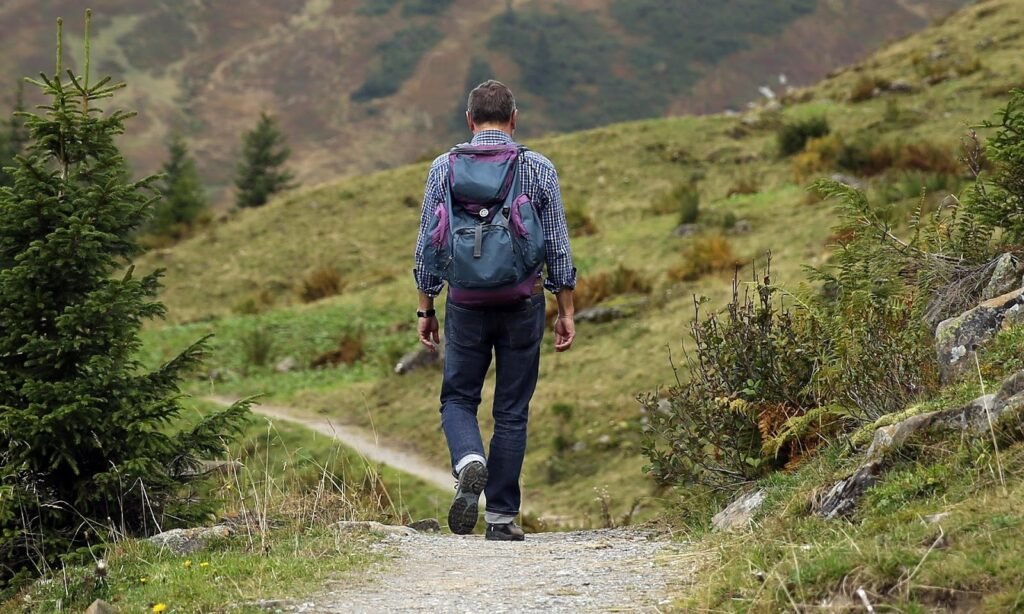
- Nature is part of our everyday personal and professional lives: looking at green spaces from the window, walking or cycling in the forest, gardening, walking the dog, horse riding…
- We participate in activities aimed at improving our physical and/or mental health through contact with nature: social and therapeutic horticulture, community gardens and farms, animal-assisted therapies, shinrin-yoku or forest bathing, etc.
- Nature acts as a co-therapist in the context of treatment or care. Therapeutic agriculture, animal-assisted therapies, wilderness therapies, forest therapy, mindfulness therapy in nature, walking therapy, orotherapy or altitude therapy…
Ecotherapy specifically concerns this last level of interaction. In this case, nature is a true therapeutic agent and a triangular relationship is created between the subject, the therapist and the environment. Clinical objectives are defined by a trained professional: restoring confidence and self-esteem, developing social skills or a trusting relationship with an animal, or training cognitive attention skills.
Recharging your batteries
You don’t need a doctor’s prescription to enjoy the physical and psychological benefits of nature! There are many ways to connect with the natural world. In her book 101 Ways to Reconnect with Nature and the Living World, Frederika Van Ingen offers simple practices, accessible to all, inspired by the ancient wisdom of indigenous peoples. These activities can be practised alone, in a group or with the family, and set you on the path to a profound transformation.
Finding your place of refuge, breathing with the trees, sitting mindfully with the birds, nurturing a sense of gratitude—these are all steps on the path to a more harmonious relationship with nature.
Mindful activities in nature allow us to heal our relationship with the world in a subtle way: when we are connected to living things, we can become fully ourselves again.
Discover what nature can do for you
If you would like to explore this path of transformation and reconnection, please do not hesitate to contact me. I would be delighted to guide you towards the Magnolia Way activity that best suits your needs.